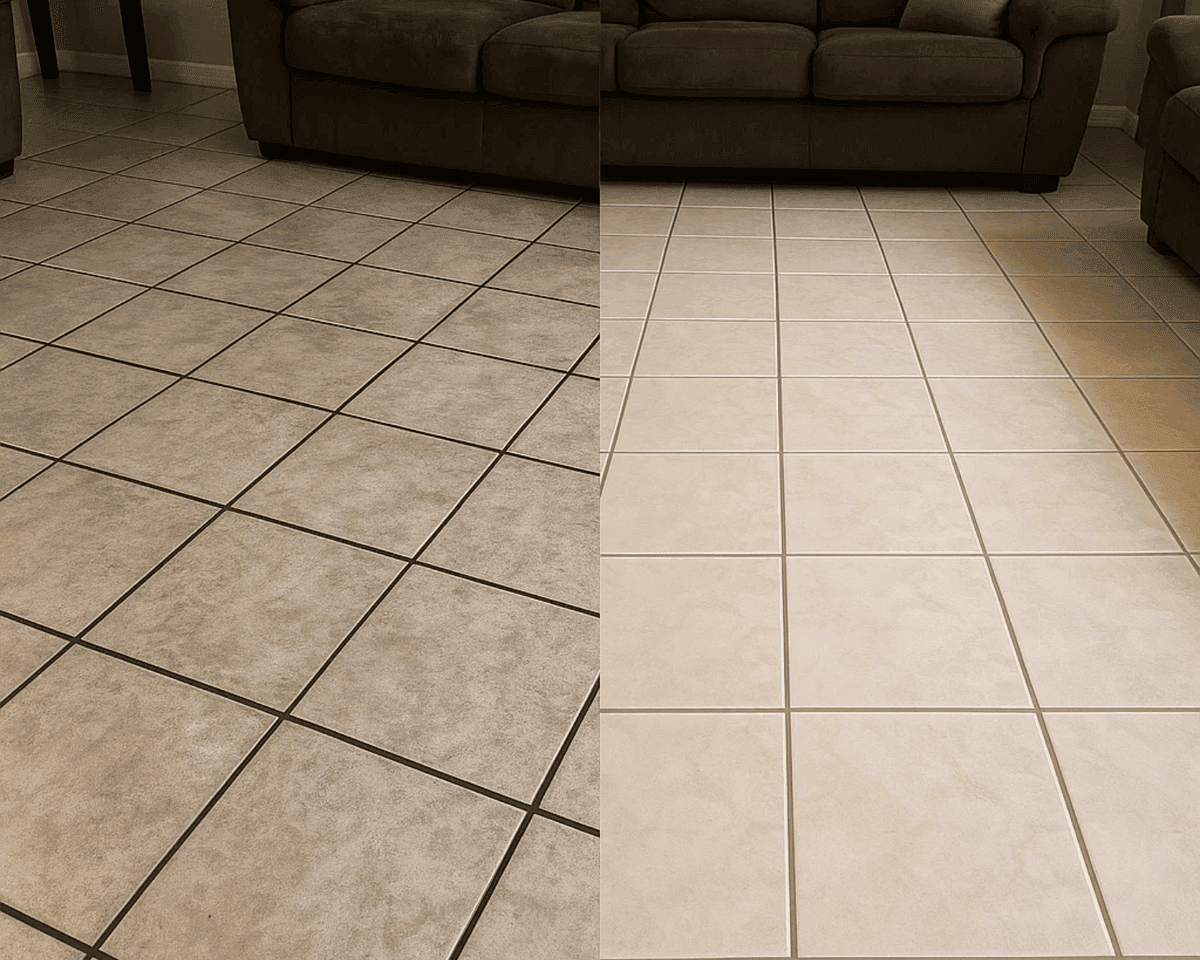
Tile and grout cleaning in Mt. Juliet can feel like an unfair fight. Your tile looks solid and sealed, but the grout lines darken anyway — especially near the stove, the shower, the front entry, and the path in from the garage. You mop every week and it still looks dingy.
There's a reason. Grout is porous and slightly recessed. It acts like a little catch zone for grit, oils, soap film, and everyday traffic. Mt. Juliet homes stay busy — rainy days bring in fine grit, kitchens collect cooking oils that drift farther than you'd expect, and bathrooms build up soap residue and moisture film. Meanwhile, most store-bought cleaners either don't stay on the grout long enough to work or leave behind a residue that attracts dirt again.
The real "best cleaner" is rarely one magic bottle. The best results come from matching the cleaner to the type of grime, using it safely, and following a process that lifts soil out of grout instead of spreading it around. Here's how we do it.
Step 1: Know What You're Cleaning
Most Mt. Juliet homes have ceramic or porcelain tile. Durable, handles most cleaners. Some homes have natural stone — marble, travertine, slate, limestone — which needs a gentler approach. Acidic products can damage stone.
Check the grout too. Is it rough and sandy, or smooth and tight? Cracked, missing, or powdery in places? Only darker in traffic lanes? Cracked grout means you should keep cleaning gentle — aggressive scrubbing makes the damage worse.
Start with the lightest effective option: pH-neutral tile cleaner for general care, or a tile-safe grout cleaner when you need more. Avoid acids on unknown tile, skip abrasives that scratch glaze, and don't soak damaged grout.
Step 2: Match the Cleaner to the Grime
- Kitchen grease and sticky residue: A tile-safe alkaline cleaner cuts oils.
- Bathroom soap film and shower buildup: A bathroom-specific cleaner with dwell time.
- Everyday tracked-in dirt: A pH-neutral tile and grout cleaner is the safest bet.
- Family-safe options: EPA Safer Choice lists products screened for safer ingredients.
Start mild, step up only when needed. Jumping straight to harsh chemicals usually creates more problems than it solves.
Step 3: Remove Dry Grit First
This is the step most people skip and it's why their results look bad. Grit turns your scrub brush into sandpaper and your mop water into muddy paste. Sweep slowly along baseboards and corners. Vacuum with a hard-floor tool if you have one. In bathrooms, get the hair and dust near the toilet base and shower threshold before anything wet goes down.
Grout pores clog with dry soil. If the cleaner can't reach the pores, it can't lift what's inside.
Step 4: Apply With Control and Give It Time
A big reason DIY tile cleaning fails is rushing. Spray, scrub immediately, mop the dirty water around — "surface clean," not grout clean.
- Apply cleaner to grout lines and problem spots, not a blanket mist
- Let it sit 5 to 10 minutes (follow the label)
- Work small sections so the cleaner doesn't dry out
In kitchens, start near the stove and sink — those areas hold oils that darken grout fastest. In bathrooms, focus on the shower floor, corners, and the line just outside the shower.
Step 5: Agitate With the Right Brush
Stiff nylon grout brush for grout lines. Soft nylon brush or non-scratch pad for tile. Scrub in short passes, following the grout line direction. Start gentle and build pressure — aggressive scrubbing out of the gate rarely helps.
Wire brushes and metal pads scratch glazed tile. Skip them.
Step 6: Lift the Dirty Solution, Don't Mop It Around
This is where "it actually worked" usually happens. If you scrub and then mop dirty water around, the soil goes right back into the grout. Blot and wipe with clean microfiber towels, or use a wet/dry vacuum. Move from cleaner zones to dirtier zones so you don't drag grime around.
Keep two towel piles. First pass lifts the dirty solution. Fresh towels on the second pass reduce haze.
Step 7: Rinse Lightly
Many cleaners leave film if not rinsed. But too much water keeps grout damp and pulls soil back up as it dries. Use a spray bottle or damp microfiber mop with clean water in small sections. Wipe dry afterward.
If the tile dries without a sticky feel or haze, you rinsed well. If it's tacky or dull, residue is still there.
Step 8: Second Pass on Stubborn Areas
Stubborn grout lines often need another pass. Don't mix products to "force" a result — that creates fumes, damages grout, and doesn't fix the underlying problem. Just repeat dwell time and scrubbing on the tough sections, lift, rinse, dry.
If two careful passes haven't changed the color, the grime is embedded below the surface. That's when professional extraction-based cleaning makes sense.
Step 9: Dry Fast to Prevent Wick-Back
Grout can look clean wet and look dirty again dry. Moisture lingers, pulls leftover soil upward during drying. Run fans, turn on bath ventilation, wipe grout lines and corners with towels. In kitchens, focus on cabinet kick plates and edges where moisture sits.
Step 10: Maintain and Consider Sealing
Cleaning resets the surface. Maintenance keeps it from sliding back.
- Sweep or vacuum often to remove grit before it grinds into grout
- Mop with a pH-neutral cleaner for routine care
- Clean spills fast, especially oils and sauces in kitchens
Grout sealing helps in high-use areas, but only when the grout is truly clean and fully dry. Sealing over residue locks in the discoloration.
Why Professional Tile and Grout Cleaning Helps
Our approach is built on a 30+ year history of professional cleaning. We identify the surface and soil type first, then match the method. We keep a quick-drying mindset and lift dirty solution thoroughly instead of leaving it in the grout. Our techs work carefully around edges and corners, and we keep the approach family-safe.
When your grout keeps re-darkening in traffic lanes, shower corners, or kitchen walkways, an extraction-based clean saves you from repeated harsh scrubbing that can accidentally damage your surfaces.
FAQs
What's the best cleaner for Mt. Juliet kitchens? A tile-safe alkaline cleaner for grease. Dry-remove grit first, apply to grout lines, give it 5–10 minutes, scrub with nylon, lift with microfiber.
Is bleach a good grout cleaner? Short-term maybe, long-term no. It doesn't remove oily soil reliably, weakens grout with repeated use, and has irritating fumes. Never mix it with other cleaners.
How often should I deep-clean tile and grout? Weekly light maintenance with pH-neutral cleaner, plus a deeper grout-focused clean every 1 to 3 months. Professional cleaning every 12 to 18 months for a full reset.
What's the safest DIY method? Process-driven, not chemical-heavy. Remove grit, apply the lightest effective cleaner, dwell time, scrub with nylon, lift with microfiber, rinse lightly, dry fast.
Why does grout look clean wet but dirty dry? Moisture plus residue. Over-wetting, product film, and embedded soil wick back up as the floor dries. Controlled moisture and lift-don't-spread technique fixes it.
Do I need to seal grout? Helpful in high-use areas when grout is fully clean and dry. Not mandatory, and sealing over residue locks in discoloration.
When should I call a pro? When DIY becomes a loop instead of a fix. If grout stays dark after two careful passes, or you're tempted to start mixing products, call.
Ready for Tile and Grout That Actually Stays Clean?
Book an appointment at 615-241-9990 or online. We serve Mt. Juliet, Lebanon, Hermitage, Hendersonville, Old Hickory, and the nearby communities.
Our office is at 120 Sunnymeade Dr in Mt. Juliet. Learn more about our tile and grout cleaning service.